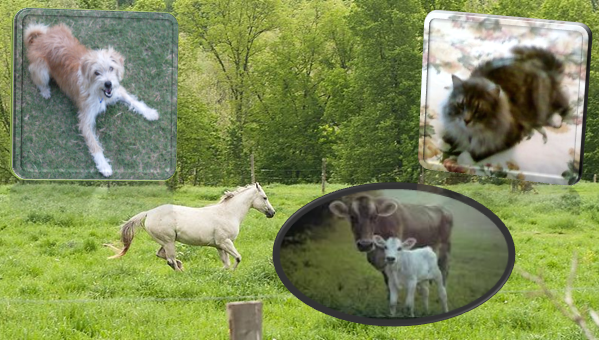
Apart from humans, dogs, cats, horses and cattle appear to be the only animals that may develop a clinical illness due to a borrelia infection (25). The primary symptom in all these animals is arthritic in nature, where inflammation of joints and limbs may lead to lameness. Dogs are competent reservoir hosts (26) and seem to be the most susceptible to developing a clinical illness (25, 27). As they are generally in close contact with humans, rates of borrelia infection/exposure in dogs has also been studied in order to try and ascertain what the degree of risk of borrelia exposure to humans may be within particular areas/environments (28-30). Apart from lameness (shifting leg lameness in particular), other symptoms in dogs may include; anorexia/weight loss, malaise, neurological dysfunction (25), severe polyarthritis (27), renal lesions (31,32), splenomegaly/ lymphadenopathy, intraocular inflammation (33) abnormal gait and convulsions (34). Cats are more prone to asymptomatic infections (33), though as well as lameness they may develop; fever, anorexia, fatigue (35-36), and kidney problems (37). Asymptomatic infections seem to be the most common in horses and cattle (38-41), although clinical illness can develop with symptoms in both animals including lameness, uveitis and weight loss (38, 41-43). Other signs in cattle include decreased milk production and abortion (42, 44,45), with head tilt, encephalitis (46,47), aborted, reabsorbed foetuses and foal mortality also being reported in clinical disease in horses (48,49).
Borrelia spirochetes have been found in the urine of infected dogs (31, 50) horses (45, 51) and cattle (45), in both symptomatic and asymptomatic animals. Studies on mice found that the spirochetes in urine remained viable for 18-24 hours and concluded that “Urine may provide a method for contact non-tick transmission of B. burgdorferi in natural rodent populations particularly during periods of nesting and/or breeding” (52: pg 40). Evidence for direct contact transmission has been demonstrated in mice (53) and further studies are required in larger animals to ascertain the potential for the borrelia spirochete to be transmitted simply by being in close contact with an infected animal.
Borrelia spirochetes have been found in the urine of infected dogs (31, 50) horses (45, 51) and cattle (45), in both symptomatic and asymptomatic animals. Studies on mice found that the spirochetes in urine remained viable for 18-24 hours and concluded that “Urine may provide a method for contact non-tick transmission of B. burgdorferi in natural rodent populations particularly during periods of nesting and/or breeding” (52: pg 40). Evidence for direct contact transmission has been demonstrated in mice (53) and further studies are required in larger animals to ascertain the potential for the borrelia spirochete to be transmitted simply by being in close contact with an infected animal.
© Karen Smith, B. Psych (Hons), 2012 -2015
This short segment on Lyme disease in animals reproduced from the "Role of Mammals as Vector and Reservoir Hosts of Lyme"
For full segment and References: Click Here to go to appropriate section on Lyme Australia Recognition & Awareness.
For full segment and References: Click Here to go to appropriate section on Lyme Australia Recognition & Awareness.